

『DN80 steam flowmeter』Related information(clamp on meter|electromagnetic meter|venturi meterrotameter|orifice meter|ultrasonic flow meter|mass flow meter|coriolis mass flow meter|coriolis flow meter|magnetic flow meter|magmeter flow meter|magflow flow meter|mag meter flow meter|electromagnetic flow meter|vortex flow meter|turbine flow meter|thermal mass flow meter|thermal flow meter|rotameter flow meter)
The simplest method to change the diameter of Siemens flowmeter is to directly modify the instrument parameters through the built-in software of the equipment. 1. Method for modifying flow parameters: Siemens flow meters (such as SITRANS F M series) are usually equipped with SIMATIC PDM or local operator interface, and can be directly modified by the following steps: - Connect the device: Connect the flow meter signal line using a dedicated cable or HART communicator - Enter the configuration menu: Find "Device Setup" → "Sensor Parameters" in the software or interface - Modify the diameter value: Enter the new diameter value (unit: mm/inch) directly in the "Nominal Diameter" or equivalent parameter item - Save and restart: After confirming the parameters, perform the save operation, and the device will automatically restart and take effect. 2 Key considerations - Range synchronization: After modifying the caliber, the range (URV/LRV value) needs to be adjusted synchronously to ensure measurement accuracy - Coefficient calibration history: Some models need to recalibrate the K coefficient (each equipment nameplate has a dedicated coefficient) - Pressure compensation: When it comes to gas/steam measurement, the pressure compensation parameters need to be checked synchronously - Permission requirements: The second level protection password is usually "100" (universal level) or "711" (expert level) When the software adjustment cannot meet the requirements of mechanical modification, mechanical modification can be adopted: - Replace the sensor sleeve: Standardized kits corresponding to different diameters (such as DN50 → DN80) - Install reduced diameter fittings: Install concentric reducers (accuracy loss of about ± 0.5%)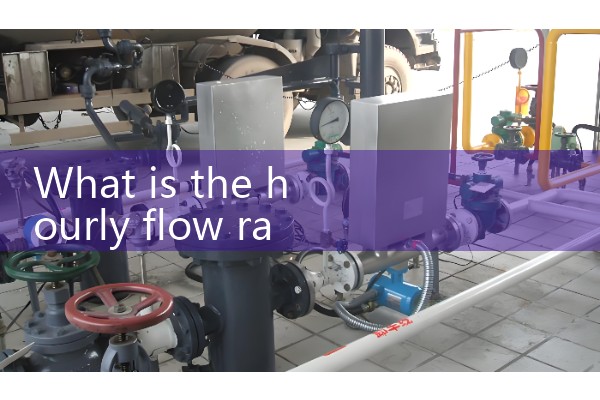
2.80 What is the flow rate per hour for pipe diameter?? In the first question, if the diameter of 80 refers to a DN80 pipeline, then based on a pressure of 2 kilograms, the ideal gas state equation PV=nRT can be used to calculate the volume V of the gas, which can then be converted to a standard volume, that is, a standard liter. Assuming the gas is gaseous petroleum gas (propane) with a molar mass of 44.1 grams per mole, R is the gas constant with a value of 8.31 J/(mol · K). Then there is: V=nRT/P=(1/44.1) x 8.31 x (273+20)/(2 x 10 ^ 5) ≈ 0.0128 m ³/h, which is converted to standard volume, i.e. standard liters per hour. There is: 0.0128 x 1000 ≈ 12.8 SLH. Therefore, the gas flow rate at 2 kg pressure on an 80 pipe diameter is approximately 12.8 standard liters per hour. In the second question, the diameter of 80 refers to a DN80 pipeline with a pressure of 0.32MPa and a flow rate of 1 hour. Gas flow meters or flow calculation formulas can be used to calculate gas flow rates. If the gas is assumed to be natural gas (methane) with a molar mass of 16.043 grams per mole and an R value of 8.314 J/(mol · K), the gas flow rate c『SILVER Official Website SERVICE』
 Hot News
 Related AD