

『Krohne Magnetic Flow Meter Installation Guidelines: Straight Pipe Diameter Run Multiplier Rules』Related information(clamp on meter|electromagnetic meter|venturi meterrotameter|orifice meter|ultrasonic flow meter|mass flow meter|coriolis mass flow meter|coriolis flow meter|magnetic flow meter|magmeter flow meter|magflow flow meter|mag meter flow meter|electromagnetic flow meter|vortex flow meter|turbine flow meter|thermal mass flow meter|thermal flow meter|rotameter flow meter)

Krohne Magnetic Flow Meter Installation Guidelines: Straight Pipe Diameter Run Multiplier Rules
Quick Answer: Electromagnetic flow meters need a clean flow profile to measure accurately. Krohne installation guidelines commonly specify straight pipe lengths in multiples of the pipe diameter, often 5D upstream and 2D downstream for standard runs. After a pump or control valve, use 10D upstream or more to reduce swirl and get a stable signal.
Silver Automation Instruments sells magnetic flow meters for water, wastewater, chemical, and food plants. We often get questions from customers in Vietnam, Indonesia, and Peru about short straight run installations. A water utility in Ho Chi Minh City installed a DN80 magnetic flow meter after a butterfly valve. The reading fluctuated by 6 percent. The problem was not the meter. The problem was insufficient straight pipe upstream.
Why Straight Pipe Run Affects Magnetic Flow Meter Accuracy
A magnetic flow meter measures the voltage generated by a conductive liquid moving through a magnetic field. The voltage depends on average flow velocity. If the velocity profile is asymmetric, the meter generates a signal that does not match the actual flow rate. Elbows, pumps, valves, and tees create swirl. Straight pipe allows the flow profile to settle before it enters the measuring tube.
Krohne guidelines and most manufacturer drawings use pipe diameter multipliers for this reason. A 5D upstream run means five times the nominal pipe diameter. For a DN100 meter, that equals 500 mm of straight pipe before the sensor. A 2D downstream run equals 200 mm after the sensor. These minimums apply to clean, fully developed flow with no heavy swirl source.
Krohne Straight Pipe Diameter Multiplier Rules in Practice
Standard installation for many Krohne electromagnetic flow meters follows a 5D upstream and 2D downstream rule. That minimum works for long straight inlet lines, such as a line from a surge tank or a simple horizontal header. For installations after a pump, three bends in different planes, or a control valve, Krohne recommendations often increase to 10D upstream and 5D downstream.
Some process conditions need more attention. A partially open gate valve creates a jet and vortex. A thermowell inserted near the sensor changes the profile. For these cases, we suggest 15D upstream or a flow straightener. We have seen a paint manufacturer in Southeast Asia run a DN50 meter after a piston pump. The meter gave a stable reading only after the plant changed the piping to provide 12D upstream and 4D downstream.
How to Apply the Straight Run Multiplier for DN15 to DN300
The math is simple. Take the pipe diameter in millimeters and multiply by the required D number. A DN15 meter with 10D upstream needs 150 mm of straight pipe. A DN150 meter with 5D upstream needs 750 mm. A DN300 meter with 10D upstream needs 3000 mm. Most engineers skip this part during pipe routing. Then the startup team finds a problem after installation.
Horizontal lines should keep the meter full of liquid. Avoid installing the meter at the highest point of a line where gas collects. Vertical installations with upward flow are acceptable and often help keep the pipe full. The same straight run rules apply. Measure the straight length from the face of the meter flange to the disturbance.
When to Use a Flow Straightener or a Different Meter Position
If the
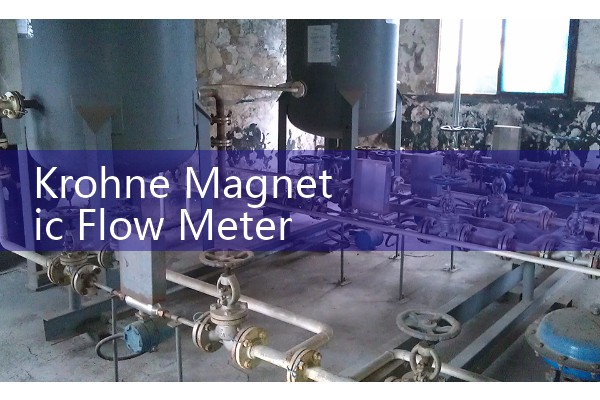
A recent project in Lima involved a DN200 electromagnetic flow meter on a wastewater discharge line. The pipe rack had only 4D of straight run after an elbow. We supplied a meter with a flow straightener and grounding rings. The final reading error was under 0.8 percent during a two week trial. Adding a flow straightener and grounding rings costs less than rebuilding a pipe rack.
Grounding and Empty Pipe Detection
Straight run is only one part of the installation. Magnetic flow meters also need good electrical grounding. For lined meters on plastic pipes, use grounding rings or grounding electrodes. Empty pipe detection is another item to configure. If the pipe drains after every batch, set the empty pipe detection threshold correctly. Otherwise the meter may read a false low flow.
Send Silver Automation Instruments your pressure in bar, temperature in °C, pipe size in DN, and flow range. Our engineers check the straight run requirement against your piping layout. You can reach us by Tel: +86-25-68650347, WhatsApp: +86-25-52155837, or WeChat: +86 15365082610.
FAQ: Magnetic Flow Meter Straight Pipe Rules
What is the minimum straight pipe run for a magnetic flow meter?
Most standard installations use 5D upstream and 2D downstream. After a pump, control valve, or multiple elbows, use 10D upstream and 5D downstream. Check the specific meter data sheet because some meter sizes and liner materials do not change the hydraulic rule.
How does Krohne calculate straight run multipliers?
Krohne uses the nominal pipe diameter D as the base unit. A 5D requirement for DN80 means 400 mm of straight pipe. A 10D requirement for DN80 means 800 mm. These multipliers apply to the process pipe inside diameter, not the flange face diameter.
Can I install a magnetic flow meter after a pump or valve?
Yes, but you need more straight pipe. A pump creates asymmetric flow and swirl. Use at least 10D upstream. If the pump has a variable speed drive, add extra length or a flow straightener. The downstream pressure also matters if the line does not stay full.
Do vertical pipe runs need the same straight length?
Yes. The same D multipliers apply in vertical lines. Upward flow is preferred because it keeps the measuring tube full. Downward flow works if the pipeline has a backpressure device that prevents the pipe from draining.
What happens if I use less straight run than recommended?
The meter may still read, but the accuracy can shift by 0.5 to 3 percent or more depending on swirl. In some cases the reading fluctuates continuously. A fluctuating reading is not a manufacturing fault. The cause is a flow profile problem and can be fixed with piping changes.
For a fast quote, send your pipe diameter, flow range, process liquid, pressure, temperature, and signal output such as 4-20 mA HART or Modbus. We supply magnetic flow meters for water abstraction lines, chemical dosing, food processing, and desalination plants. Tel: +86-25-68650347, WhatsApp: +86-25-52155837, WeChat: +86 15365082610.
 Hot News
 Related AD