

『Flowvis Pool Flow Meter Operation: Balancing Filter Turnover Rates and Energy Savings』Related information(clamp on meter|electromagnetic meter|venturi meterrotameter|orifice meter|ultrasonic flow meter|mass flow meter|coriolis mass flow meter|coriolis flow meter|magnetic flow meter|magmeter flow meter|magflow flow meter|mag meter flow meter|electromagnetic flow meter|vortex flow meter|turbine flow meter|thermal mass flow meter|thermal flow meter|rotameter flow meter)
Flowvis Pool Flow Meter Operation: Balancing Filter Turnover Rates and Energy Savings
Quick Answer: A Flowvis pool flow meter gives you real flow data in m³/h or L/min. Use that data to run the filter pump only as fast as needed for the required turnover rate. Most commercial pools can cut pump energy by 15 to 25 percent when the flow meter reading is used to trim pump speed or valve position.
Silver Automation Instruments has supplied flow measurement equipment to water treatment contractors in Southeast Asia and Australia. The same logic applies to any pool flow meter brand. The key is not the device alone. The key is what you do with the reading.
What the Flowvis Pool Flow Meter Shows in Daily Operation
In practice, the meter displays two values. Instantaneous flow rate in m³/h or L/min and totalized volume in m³. That is enough to spot a filter problem early.
Consider a 25 m public pool with a water volume of 350 m³. The local health code requires a 4 hour turnover. The design flow rate is 87.5 m³/h. A clean filter and a pump at full speed might deliver 105 m³/h. A dirty filter might drop that to 70 m³/h. The pump still draws nearly the same power.
Most operators only check the pressure gauge. But pressure rises as flow falls. A Flowvis meter shows the actual decrease. When flow drops below 80 percent of design, it is time to backwash or clean strainer baskets. This avoids guessing and avoids running the pump extra hours to compensate.
Balancing Turnover Rate Without Overpumping
Here is the thing. Turnover rate is calculated from pool volume divided by flow rate. A 400 m³ pool flowing at 80 m³/h has a 5 hour turnover. At 100 m³/h, turnover is 4 hours. But the extra 20 m³/h may not be needed if the bather load is low.
Before installing a flow meter, many sites run pumps at a fixed frequency. The flow meter shows that clean filters produce more flow than the system needs. A customer in Vietnam ran a 15 kW pump at 50 Hz on a resort pool. The Flowvis meter showed 118 m³/h against a design flow of 95 m³/h. We suggested lowering the VFD to 44 Hz. Flow dropped to 96 m³/h. Pump power fell by roughly 30 percent. Water quality stayed within the local standard.
So do not chase the maximum flow. Match the flow to the turnover rate. Check the meter after backwash because flow rises again. Then reduce speed or throttle the discharge valve if no VFD exists.
Energy Savings From Correct Flow Meter Operation
Pump power changes with the cube of speed. A 15 percent speed reduction can cut energy use by about 39 percent. A 20 percent reduction can cut it by about 49 percent. The flow meter gives you the signal to make this change safely.
For a 15 kW pump running 18 hours per day at 0.18 USD per kWh, a 20 percent power reduction saves about 2,800 USD per year. That is more than the installed cost of a mid range pool flow meter with a 4-20 mA output.
We have seen this on customer sites many times. A water park in Queensland used two Flowvis meters to balance flow across parallel sand filters. One filter was taking 70 percent of the total flow because of piping differences. After balancing with butterfly valves, both filters loaded evenly. Backwash frequency dropped from daily to every third day. Pump runtime decreased by 11 percent.
That is the hidden saving. Fewer backwash cycle
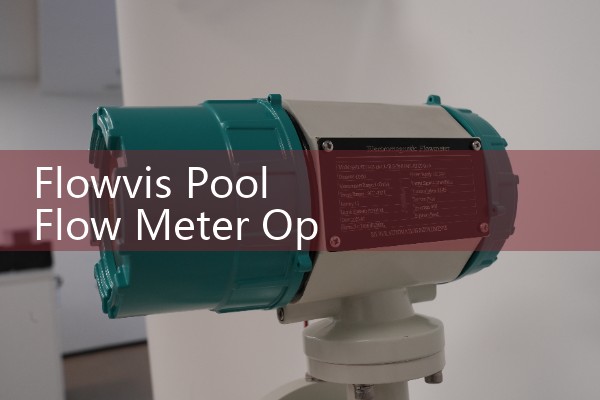
Flowvis Installation and Signal Output
Install the meter on a straight pipe section after the pump and before the filter. For DN80 to DN150 lines, allow at least 5 pipe diameters upstream and 3 downstream. Avoid air pockets. In horizontal pipe, mount the sensor where the pipe stays full.
The Flowvis pool flow meter can output 4-20 mA, pulse, or RS485 Modbus. For a building management system, 4-20 mA is the simplest. For a standalone display with data logging, Modbus is better. Silver Automation Instruments can help you choose the right output for your control panel. We also supply equivalent inline flow meters for pool and water treatment projects.
Send us your pipe size (DN), flow range (m³/h), signal type, and pool volume. We will recommend a meter and quote your project. Contact us on Tel: +86-25-68650347 or Whatsapp: +86-25-52155837. You can also reach us on WeChat: +86 15365082610.
Recommended Settings for Common Pool Types
A 50 m lap pool with 3 lanes often holds between 400 and 500 m³. A 4 hour turnover means 100 to 125 m³/h. A hotel resort pool of 250 m³ often uses a 4 hour turnover at 62.5 m³/h. A spa or plunge pool under 20 m³ may need a 30 minute turnover. That means 40 m³/h minimum flow.
Do not copy settings from another site. Pool shape, pipe length, filter media, and local health rules change the target. Use the flow meter to set the pump. Then log the readings weekly. If the same speed gives lower flow over time, the filter is loading. If flow is always high, you are overpumping.
Frequently Asked Questions
What turnover rate should a commercial pool maintain in Australia?
Most Australian public pools follow state health guidelines. A common target is 4 to 6 hours for full water turnover. Check with the local council. The flow meter helps you confirm the actual rate instead of relying on pump nameplate data.
How do I know if my pool flow meter reading is accurate?
Compare the reading against pump curve and pressure gauge readings. If the meter shows a flow that does not match the pump curve, check for air bubbles, installation straight run, or a damaged sensor. Regular calibration against a known volume can also help.
Can a Flowvis pool flow meter help reduce chemical costs?
Yes. When actual flow matches the required turnover, filtration and chemical dosing become more stable. Many operators reduce chlorine or pH correction swings because the water volume processed is predictable.
What pipe size and flow range fits a 50 m lap pool?
Most 50 m lap pools need DN100 to DN150 pipe and a flow meter range of 80 to 150 m³/h. A 4-20 mA output works well with VFD control panels. Silver Automation Instruments can help verify the line size from your pump data.
Does Silver Automation Instruments supply Flowvis pool flow meters?
We supply industrial and commercial flow meters for water, wastewater, and pool filtration applications. While Flowvis is a known brand, we can offer equivalent inline flow meters with similar accuracy and outputs. Send your flow range and pipe size to get a specific offer.
For a fast quote, contact Silver Automation Instruments. Tel: +86-25-68650347. Whatsapp: +86-25-52155837. WeChat: +86 15365082610.
 Hot News
 Related AD