

『Pump flow calculation formula』Related information(clamp on meter|electromagnetic meter|venturi meterrotameter|orifice meter|ultrasonic flow meter|mass flow meter|coriolis mass flow meter|coriolis flow meter|magnetic flow meter|magmeter flow meter|magflow flow meter|mag meter flow meter|electromagnetic flow meter|vortex flow meter|turbine flow meter|thermal mass flow meter|thermal flow meter|rotameter flow meter)

1. Calculation formula for pump flow rate
The calculation formula for pump flow rate is Q=[/t] × K, which means the maximum hourly flow rate={[]/} × hourly coefficient of variation. The following is a detailed explanation of the formula: Q: represents the flow rate of the pump, and the single branch position is usually cubic meters per hour. m: The number of water users is an important factor affecting the flow rate. q: The representative water standard refers to the amount of water used by each person or device per unit of time, usually measured in liters per person per time. t: Indicates the duration of water usage, usually measured in hours. When calculating, it is necessary to convert the water usage time into hours. 1000: As water standards are usually measured in liters, while flow rates are usually measured in cubic meters, it is necessary to convert liters to cubic meters. K: Represents the hourly variation coefficient, which is an empirical coefficient used to consider the difference between actual water usage and limb disturbance sensitive average water usage. It is usually greater than 1 to reflect fluctuations in water usage. Li Zhis formula can help engineers or technicians calculate the required pump flow rate based on specific water requirements and conditions, and thus choose the appropriate pump type and specifications.
2. Three formulas you must know when choosing a water pump! When choosing a water pump model, it is crucial to calculate and select three key parameters: pump flow rate, pipe diameter, and head. The following are specific calculation methods and parameter selection principles.
1. Calculation formula for water pump flow rate: Q=1.163L * Δ T, where Q is the cooling
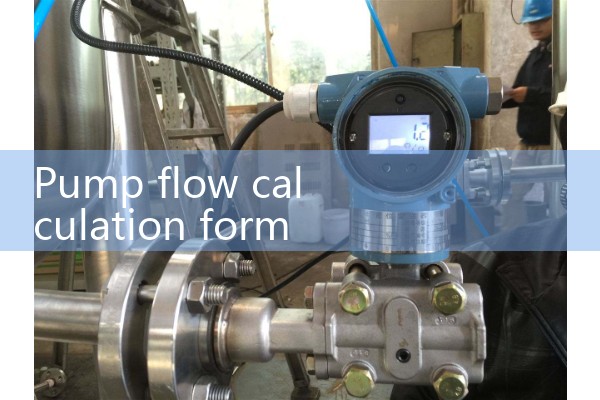
2. Calculation formula for water pipe diameter: D (m)=√ L (m ³/h)/0.785x3600xv (m/s) When calculating the pipe diameter, the system cooling water flow rate and the selected flow rate should be considered.
. Qiaoqiao selects the appropriate range of pipe diameter based on the flow velocity value, for example, when the flow velocity is 1.0m/s, it can choose between DN40 and DN50. The inlet and outlet pipe diameters of the water pump should be one size smaller than the pipe section it is located in to ensure the stable operation of the beam system.III. Calculation formula for pump head: Hmax=△ P1+△ P2, where △ P1 is the resistance along the pipeline and △ P2 is the local resistance of the pipeline.
. Head is an important indicator for measuring the ability of a pump to enhance liquid energy, and accurate calculation is necessary rather than relying on experience. By accurately calculating the head, it is possible to avoid inefficiency or system failure caused by improper selection. In summary, reasonable calculation of flow rate, pipe diameter, and head, combined with actual needs and engineering conditions, can effectively select suitable pump models. The correct selection of water pump model is of great signif Hot News
 Related AD