

『Balance flowmeter formula』Related information(clamp on meter|electromagnetic meter|venturi meterrotameter|orifice meter|ultrasonic flow meter|mass flow meter|coriolis mass flow meter|coriolis flow meter|magnetic flow meter|magmeter flow meter|magflow flow meter|mag meter flow meter|electromagnetic flow meter|vortex flow meter|turbine flow meter|thermal mass flow meter|thermal flow meter|rotameter flow meter)

How is pipeline flow calculated?
1. Basic formula: Volume flow rate formula: Q=A × v, where Q: Volume flow rate (unit: m3/s or L/min). A: The cross-sectional area of the pipeline (unit: m2), the formula for the area of a circular pipeline is A=π× (d/2) 2, where d is the inner diameter of the pipeline. v: Average fluid velocity (unit: m/s). Mass flow formula: W=ρ× Q, where W: Mass flow rate (unit: kg/s). ρ: Fluid density (unit: kg/m3).
II. Distinguishing between laminar and turbulent flow. Laminar flow: fluid flows in layers, dominated by viscous rock forces, with Reynolds number Re<2300 (for circular pipelines).
. Δ P: Pressure difference at both ends of the pipeline (unit: Pa). μ: Fluid dynamic viscosity (unit: Pa ⋅ s). L: Pipeline length (unit: m). Flow calculation: Hagen Poiseuille law Q=128 × μ × L π× d4 × Δ P, where turbulence: fluid mixing flow, dominated by inertial force, Reynolds number Re>4000 (circular pipeline). Flow calculation: It is necessary to combine empirical formulas (such as Darcy Weisbach formula) or experimental data. Darcy Weisbach formula: Δ P=f × dL × 2 ρ× v2, where f is the coefficient of friction (related to Reynolds number and pipeline roughness).3. Calculation steps to determine fluid properties: measure or search for the density ρ and dynamic viscosity μ of the fluid. Measure pipeline parameters: obtain the inner diameter d and length L of the pipeline. Determine the flow state: calculate the Reynolds number Re=μ ρ × v × d to determine laminar or turbulent flow.
. Formula selection: Laminar flow: Use the Hagen Poiseuille law in the book. Turbulence: Use Darcy Weisbach formula combined with friction coefficient chart or empirical formula. Calculate flo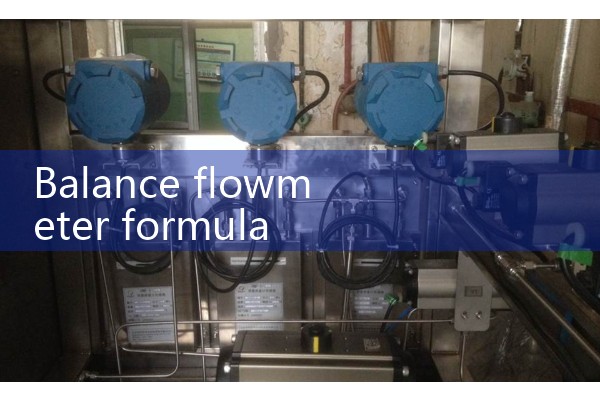
2. How to calculate flow rate using differential pressure flowmeter
Differential pressure flowmeter is a type of flowmeter, and its calculation formula is related to the relationship between differential pressure and flow rate. The calculation formula for differential pressure flow meters may vary depending on different principles and applications. Here are some common formulas for calculating differential pressure flow meters. 1. Fluid static pressure balance flow meter: Q=CA (Δ P/ρ), where Q is the flow rate, C is the flow coefficient, A is the cross-sectional area of the measuring tube, Δ P is the static pressure difference between upstream and downstream, and ρ is the fluid density
2. Differential pressu
 Hot News
 Related AD