

『Kurz Air Flow Meter Sizing: Thermal Mass Anemometers for High-Velocity Stack Ventilation』Related information(clamp on meter|electromagnetic meter|venturi meterrotameter|orifice meter|ultrasonic flow meter|mass flow meter|coriolis mass flow meter|coriolis flow meter|magnetic flow meter|magmeter flow meter|magflow flow meter|mag meter flow meter|electromagnetic flow meter|vortex flow meter|turbine flow meter|thermal mass flow meter|thermal flow meter|rotameter flow meter)

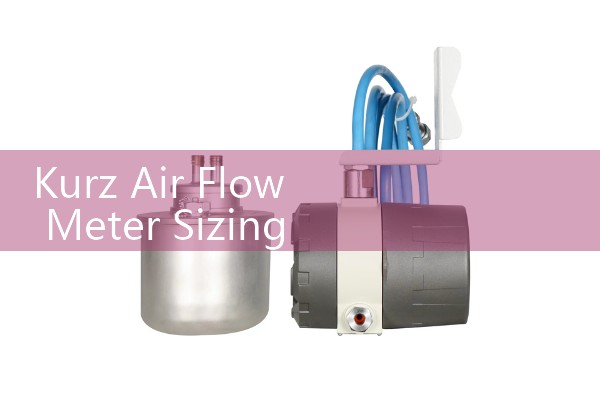
Kurz Air Flow Meter Sizing: Thermal Mass Anemometers for High-Velocity Stack Ventilation
Quick Answer: For high-velocity stack ventilation, size a thermal mass flow meter by the stack inside diameter, gas composition, gas temperature in °C, operating pressure in bar, and the normal and maximum flow in kg/h or Nm3/h. A Kurz style insertion thermal mass anemometer suits round stacks from DN100 to DN3000 when the flow velocity stays between roughly 0.5 Nm/s and 60 Nm/s. Send Silver Automation Instruments your stack diameter, gas type, temperature in °C, pressure in bar, and flow range, and we will reply with a model, insertion length, and price.
Stack vent gas is not the same as clean compressed air. Hot exhaust gas can carry moisture, dust, solvent vapor, and corrosive compounds. A thermal mass flow meter with constant temperature differential technology reads mass velocity directly. This helps when gas density changes with stack temperature. In practice, the meter heats a velocity sensor and keeps a fixed temperature gap above a PT100 reference sensor. More gas flow removes more heat. The electronics convert the required heating power into a 4-20 mA HART mass flow signal.
What Changes in High-Velocity Stack Ventilation
High-velocity stack gas can run from 10 Nm/s to 40 Nm/s in many vent systems. Some burner exhaust lines reach 60 Nm/s during upset conditions. The insertion probe must survive vibration, particles, and temperature swings. Kurz air flow meter sizing charts often assume a fully developed flow profile. For a round stack, the sensor tip is usually placed at the average velocity point. Engineers often set the insertion depth from 0.5 to 1.0 times the stack diameter from the wall, depending on the flow profile and upstream disturbances.
Sizing Inputs You Need
We have seen many customer sites where sizing stops because one number is missing. You need the stack inside diameter in mm or DN. You need the gas composition, for example air, flue gas, biogas, nitrogen, or natural gas. You need normal, minimum, and maximum flow in kg/h, Nm3/h, or scfm. You also need gas temperature in °C and operating pressure in bar or kPa. For exotic gas blends, send the gas analysis and viscosity in cP if available. With these inputs we can check the velocity range against the sensor turndown.
A Practical Sizing Example from Vietnam
Last year a paint manufacturer in Vietnam asked us to size a thermal mass flow meter for a drying oven stack. The stack diameter was DN400. Gas temperature ranged from 80 to 140 °C. Normal flow was 4500 kg/h. Maximum flow was 6500 kg/h. Minimum flow was 1000 kg/h. The gas was air with some solvent vapor. The customer had checked Kurz air flow meter sizing tables but needed a faster delivery option. We quoted a Silver Instruments insertion thermal mass flow meter with a DN50 ball valve assembly, PT100 reference sensor, 4-20 mA HART output, and a local digital display. The velocity range covered from about 2.6 Nm/s to 17 Nm/s. Hot tap installation allowed the probe to be installed without stopping the oven exhaust fan.
How to Read Velocity Range and Turndown
Most insertion thermal mass flow meters have a velocity range of 0 to 60 Nm/s. The useful range depends on gas density and sensor design. Below 0.5 Nm/s, natural convection can create reading drift. Above 60 Nm/s, the sensor cooling effect can become non-linear unless the meter has a special high-velocity cal
Installation Notes for Stack Gas Service
Mount the probe with enough straight run. If possible, place the insertion point 15 stack diameters downstream of a fan outlet, damper, or bend. Keep 5 stack diameters of straight run downstream. For stacks with limited access, a shorter run may work, but the flow profile correction must be checked. Use a ball valve retractor for hot or dirty gas service. This lets you remove the probe for cleaning without a process shutdown. The sensor flow direction arrow must match the actual gas path. For wet stacks, order a sensor with a sintered filter or moisture-resistant coating. A purge connection helps when dust or sticky particles are present.
Silver Instruments Thermal Mass Flow Meter Options
Silver Instruments supplies insertion thermal mass flow meters for stack vent, flue gas, aeration air, and digester gas. The standard output is 4-20 mA HART. RS485 Modbus RTU is optional. The display can be configured in kg/h, Nm3/h, scfm, or lb/h. The probe is available in 316L stainless steel with PT100 temperature compensation. ATEX Zone 1 and Class I Div 2 approvals are available for hazardous areas. For small purge air lines, similar thermal mass flow meters are available from DN15 to DN100 with inline or insertion bodies. If you currently use Kurz thermal mass flow meters, our engineers can match the insertion length, mounting thread, and output signal.
FAQ: Kurz Air Flow Meter Sizing and Thermal Mass Anemometers
Q1: What flow range can a thermal mass anemometer measure in a stack?
A typical insertion probe covers 0 to 60 Nm/s. Some high-velocity sensors extend to 100 Nm/s. The actual mass flow in kg/h depends on the stack cross-sectional area and gas density.
Q2: Do I need pressure and temperature compensation for stack gas mass flow?
No for direct mass flow measurement. Thermal mass meters read mass velocity directly. For standard volumetric flow, for example Nm3/h, the meter calculates using pressure and temperature inputs.
Q3: Can a thermal mass flow meter handle wet or dirty stack gas?
Yes if the sensor has a moisture-resistant coating or a purge connection. Saturated stack gas can cause drift if water droplets hit the sensor. Tell us the dew point and dust load before sizing.
Q4: What insertion depth should I use for a round stack?
The sensor tip normally sits at the average velocity point, around 0.5 to 1.0 times the stack diameter from the wall. We calculate the exact insertion depth from your stack diameter and flow profile.
Q5: What outputs and approvals are available for stack vent flow meters?
Silver Instruments thermal mass flow meters come with 4-20 mA HART and optional RS485 Modbus RTU. ATEX Zone 1 and Class I Div 2 options are available. The local display can show kg/h, Nm3/h, scfm, or velocity.
Send us your stack diameter, gas type, temperature in °C, pressure in bar, and flow range. Our engineers will reply with a recommended thermal mass flow meter model, insertion length, and price. Tel: +86-25-68650347. WhatsApp: +86-25-52155837. WeChat: +86 15365082610.
 Hot Blog
 Related AD