

『Gas Flow Meter with 4-20 mA Output: Industrial Telemetry Transmitters』Related information(clamp on meter|electromagnetic meter|venturi meterrotameter|orifice meter|ultrasonic flow meter|mass flow meter|coriolis mass flow meter|coriolis flow meter|magnetic flow meter|magmeter flow meter|magflow flow meter|mag meter flow meter|electromagnetic flow meter|vortex flow meter|turbine flow meter|thermal mass flow meter|thermal flow meter|rotameter flow meter)
 ```html
Gas Flow Meter with 4-20 mA Output: What Works on Real Sites
Quick Answer: A gas flow meter with 4-20 mA output sends a loop-powered analog signal straight to your PLC, DCS, or remote telemetry unit. It works without digital coms, survives long cable runs in Zone 1 or Zone 2, and gives your control room a direct real‑time flow reading in Nm³/h or kg/h. Silver Instruments stocks thermal mass, Coriolis, and vortex gas flow meters with this output. Send us your pipe size, gas type, pressure in bar, and temperature in °C to get a same‑day quote.
Most engineers skip the theory and shoot for one thing. A signal that lands clean inside the control panel. Here is the thing. A 4-20 mA loop from a gas flow meter still beats many fieldbus setups in simplicity and noise immunity. We see it on customer sites from a biogas plant in Thailand to a nitrogen generator in the UAE. One pair of wires carries both power and the 0‑100% scaled flow rate. That matters a lot when your junction box sits 200 metres from the transmitter in full sun.
In practice, three gas meter types dominate orders with a 4-20 mA output. Thermal mass flow meters for compressed air, nitrogen, CO₂, and natural gas. Vortex flow meters for saturated steam and clean dry gases above DN40. Coriolis mass flow meters for high‑value gases like hydrogen, argon, or ethylene where you need kg/h directly without pressure and temperature compensation. Silver Instruments supplies all three. The thermal model starts at DN15 and goes up to DN200, with a built‑in PT100 sensor and a 4-20 mA loop that represents Nm³/h. The vortex meter accepts gas temperatures up to 250 °C and gives a pulse output in parallel to the 4-20 mA signal. The Coriolis meter uses a dual tube design, handles up to 100 bar, and puts out mass flow, density, and temperature over separate 4-20 mA channels or via HART on the same pair.
Why does the 4-20 mA output still lead in industrial telemetry? Because a site electrician can troubleshoot it with a multimeter. Because the sourcing panel does not care if the transmitter is SIL‑rated or not, it just reads 4 mA as zero flow and 20 mA as full scale. We asked a field tech at a water treatment plant in Saudi Arabia what he liked about his vortex gas meter. He said: “No software, no laptop, just a screwdriver and 4 mA.” That is the sentiment across hundreds of SME plants.
But watch the wiring. A 2‑wire loop‑powered transmitter uses the same two wires for supply and signal. A 4‑wire version needs separate mains power and puts out a passive 4-20 mA. On gas meters, 2‑wire is standard because ATEX Zone 1 permits low‑power loops with an intrinsic safety barrier. Silver Instruments can ship meters with ATEX, IECEx, or EAC certification depending on your site code in Vietnam, Nigeria, Chile, or Qatar.
Another detail that saves time in the field: turndown ratio. A thermal mass flow meter with a 100:1 turndown can measure 0.5 Nm³/h up to 50 Nm³/h on the same 4-20 mA scale without losing accuracy at the bottom. In a biogas line from an anaerobic digester, the flow can swing between 2 and 45 Nm³/h. A 10:1 vortex meter would cut off around 5 Nm³/h. That costs methane. So the project engineer chose a thermal meter from us, set 4 mA = 0, 20 mA = 50 Nm³/h, and the SCADA trend became smooth. That specific detail came from a customer site in Malaysia last year.
Most engineers skip this part: the 4-20 mA signal can carry HART data on the same two wires. That means you can keep the analog loop for real‑time control and still poll the device for totaliser, diagnostic flags, and gas temperature. A Coriolis meter with HART gives you mass flow on 4-20 mA plus density and temperature via digital HART commands. The PLC reads the flow loop, the asset management software reads the extra data. Two birds, one pair of wires.
What gas types can you measure? Here are common ones we ship for: compressed air (thermal mass), natural gas (thermal or Coriolis), nitrogen (thermal), CO₂ (thermal or Coriolis), biogas (thermal with purging options), argon (Coriolis), hydrogen (Coriolis, small DN), oxygen (thermal with clean‑for‑O2 service), and steam (vortex with integrated temperature compensation). Tell us the gas mix, moisture level, and any corrosive trace. A food‑grade
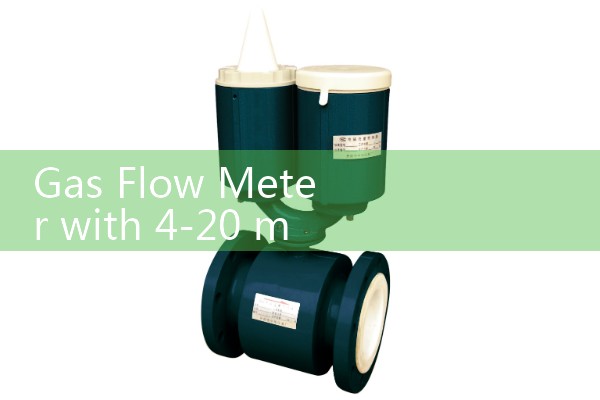
Mounting matters. Inline gas meters from DN15 to DN100 use wafer or flanged connections. Insertion thermal probes go into pipes from DN150 upwards via a ½ inch or ¾ inch ball valve. The insertion type gives a 4-20 mA output proportional to the velocity and a totaliser via HART. A customer in South Africa put an insertion thermal meter on a 600 mm compressed air main. They isolated the hot tap, retracted the probe, cleaned it, and reinserted it during production. That is industrial pragmatism.
Price. A basic inline thermal gas flow meter with 4-20 mA output starts around USD 600 for small DN, no display, no certification. A vortex meter with integrated temperature and pressure compensation for steam is around USD 950. A Coriolis meter for gas mass flow starts at USD 2,800 depending on DN and approvals. These are real ex‑works prices you can compare. More important is the total cost of ownership: a thermal meter has no moving parts, no pressure drops worth mentioning, and zero maintenance in clean gas. A vortex meter may need a straight run of 15D upstream and 5D downstream. A Coriolis meter does not care about flow profile but has a higher pressure drop. Share your piping constraints when you ask for a quote.
OEMs and system integrators often ask us for a private label version. We can silk‑screen your logo on the housing, set the 4-20 mA range at the factory, and supply a calibration certificate traceable to ISO 17025. Lead time for standard models is 3–5 working days. Custom scales and gas calibrations extend it to 7–10 days.
If your telemetry system runs on solar with very low power, consider a loop‑powered meter that draws less than 0.5 W. The thermal and vortex models from Silver Instruments need 0.3–0.8 W typical. That works with a 12 V DC battery and a small solar panel in a remote gas well in Oman. We have seen this setup kept alive for years.
FAQ: Gas Flow Meter with 4-20 mA Output
Q1: Can I get a 4-20 mA output from a gas flow meter without an external power supply?
Yes. A 2‑wire loop‑powered meter draws power from the same 24 V DC loop fed by the PLC or DCS. No extra mains needed. Silver Instruments thermal and vortex meters commonly ship in 2‑wire configuration.
Q2: Which gas flow meter type works best for low‑flow natural gas in a ½ inch pipe?
A thermal mass flow meter or a small‑DN Coriolis meter. Thermal works down to very low velocities. Coriolis gives direct mass flow in kg/h without any compensations. Send us your minimum and maximum flow so we size it right.
Q3: How do I scale the 4-20 mA output to engineering units?
You set the LRV (4 mA) and URV (20 mA) on the transmitter faceplate or via HART. Example: 4 mA = 0 Nm³/h, 20 mA = 100 Nm³/h. The loop then maps 12 mA to 50 Nm³/h linearly. Every meter from Silver Instruments leaves the factory pre‑scaled to your order.
Q4: Is the 4-20 mA signal sufficient for custody transfer of gas?
For internal accounting and process control it works well. Legal custody transfer often demands redundant meters, pulse outputs, or digital protocols alongside the analog loop. Our Coriolis meter with a pulse output plus a 4-20 mA HART output satisfies many local fiscal requirements in Nigeria and Peru.
Q5: Can I use a single 4-20 mA analog input card to read flow, temperature, and pressure?
No. Each 4-20 mA output represents one variable. If you need multiple variables, choose a meter with multiple analog outputs or a HART digital overlay. Silver Instruments meters can be ordered with two or three 4-20 mA channels.
Get a quote or ask a technical question. Email your gas parameters to [email protected] or WhatsApp 86-135-12131526. Our engineers check pipe size (DN), pressure (bar), temperature (°C), and flow range (min and max) before recommending a model. Same‑day reply during working hours NST. Call +86-135-1213-1526 for urgent project support. WeChat: +86 13512131526.
``` Hot Blog
 Related AD