


 Current position > Product detail
『Inline CFM Air Flow Meter: Monitoring Compressed Air Volume』Related information(clamp on meter|electromagnetic meter|venturi meterrotameter|orifice meter|ultrasonic flow meter|mass flow meter|coriolis mass flow meter|coriolis flow meter|magnetic flow meter|magmeter flow meter|magflow flow meter|mag meter flow meter|electromagnetic flow meter|vortex flow meter|turbine flow meter|thermal mass flow meter|thermal flow meter|rotameter flow meter)

Inline CFM Air Flow Meter: Monitoring Compressed Air Volume
Quick Answer
An inline CFM air flow meter measures actual cubic feet per minute of compressed air directly inside a pipe. For compressed air monitoring, thermal mass flow meters offer direct mass flow reading without pressure and temperature compensation. Silver Instruments supplies inline compressed air flow meters with 4-20 mA HART, pulse, and RS485 outputs, ideal for pipe sizes from DN15 to DN200.
What Is an Inline CFM Air Flow Meter?
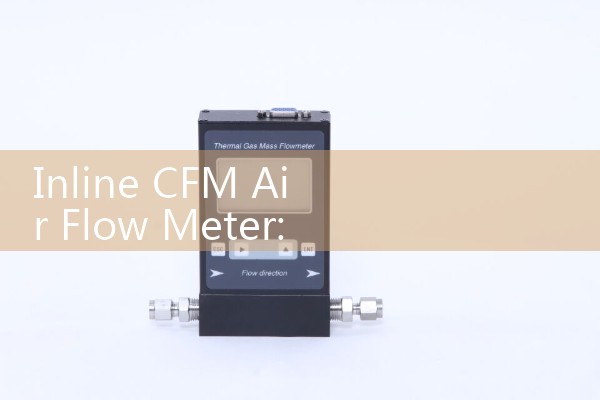
An inline CFM air flow meter sits directly in the compressed air line. It measures the volumetric flow rate in cubic feet per minute. Many models also calculate mass flow in kg/h or standard cubic meters per hour. The inline design eliminates the need for bypass piping or external mounting kits. You install the meter between two flanges or screw it into threaded pipe sections.
At customer sites in Indonesia and Nigeria, we see compressed air systems using CFM as the primary unit. A food packaging plant near Jakarta recently asked for a meter that reads out in both CFM and Nm³/h. Their air compressor fed multiple filling lines. The inline meter gave them a single point of truth for air consumption per shift.
Why Compressed Air Flow Measurement Matters
Compressed air is one of the most expensive utilities in a factory. A typical 100 kW compressor can cost over USD 40,000 per year in electricity. Leakage rates of 20 to 30 percent are common. Without a flow meter, you never know how much air each production area consumes.
We learned this firsthand from a textile mill in Bangladesh. They installed seven inline thermal mass flow meters on branch lines. Within two months, they identified a stuck solenoid valve blowing air continuously. That single fix saved them AUD 12,000 annually. The meters paid for themselves in under six months.
Inline Thermal Mass Flow Meter vs. Other Types
For compressed air, thermal mass flow meters outperform differential pressure devices. A DP transmitter with an orifice plate creates permanent pressure loss. That costs you extra compressor energy. A thermal meter has negligible pressure drop. It measures flow by sensing heat dissipation from a heated sensor into the moving gas.
Vortex flow meters can also measure compressed air flow. They work well on larger pipes above DN50. But they struggle with low flow cut-off and pulsating flow from reciprocating compressors. A thermal mass meter from our product range handles velocities as low as 0.1 Nm/s. This matters when machines idle and air demand drops to near zero.
Key Parameters to Specify Before You Buy
Send us these four values and we will return a quote within 8 hours.
Pipe size in DN or inches. We supply inline meters from DN15 up to DN200. For DN250 and larger, we offer insertion probe versions.
Operating pressure in bar or psi. Most compressed air lines run at 7 to 10 bar. The meter must withstand this pressure and measure flow at actual line conditions.
Temperature range in °C. Compressed air downstream of an aftercooler typically sits at 30 to 40°C. Inline thermal meters at Silver Instruments tolerate media temperatures up to 150°C for standard models.
Flow range in CFM or Nm³/h. Give us minimum, normal, and maximum flow. This determines the meter size and avoids running a DN100 meter at 2% of its range.
Common Applications in Southeast Asia and Australia
Food and beverage plants use compressed air for pneumatic actuators, air knives, and packaging machines. A dairy in Victoria installed six inline CFM air flow meters on individual packaging bays. They cut compressed air costs by 18% after reconfiguring idle blow-off nozzles.
In the Middle East, oil and gas service shops use compressed air for instrument air and purging. A customer in Dubai chose our explosion-proof thermal mass flow meter with ATEX Zone 1 certification. The meter measured dry compressed air feeding a control panel enclosure.
Marine and shipbuilding yards in the Philippines often request compact inline meters with local displays. A tugboat operator in Manila retrofitted three meters to monitor air consumption of engine room c
Output Signals and System Integration
All Silver Instruments inline compressed air flow meters include three standard outputs. The first is a 4-20 mA analog signal proportional to flow. The second is a pulse output for totalized volume. The third is an RS485 Modbus RTU digital interface. HART protocol is available on request.
Integration with energy management systems is straightforward. You can map mass flow, totalized flow, and media temperature to the PLC. One chemical plant in Mexico City used the Modbus output of our meters to display live air consumption on a central HMI. This data fed their ISO 50001 energy baseline.
Installation Tips for Inline CFM Air Flow Meters
Most engineers skip this part and later get noisy readings. The meter needs straight pipe upstream and downstream. For thermal mass meters, 15 pipe diameters upstream and 5 diameters downstream are enough. Install the meter away from elbows, valves, and tees.
We have seen on customer sites many times that a ball valve located three pipe diameters upstream caused swirling flow. The meter reading jumped by 20%. After moving the meter past the required straight run, the reading stabilized. A flow conditioner can help when space is tight.
Mount the meter so the pipe always stays full of compressed air. This sounds obvious, but in vertical down pipes, air can separate from condensate. Inline meters belong in horizontal runs or vertical upflow pipes where gravity helps keep the flow uniform.
Inline CFM Air Flow Meter Models from Silver Instruments
Silver Instruments offers two series for compressed air. The SIT-100 inline thermal mass flow meter covers pipe sizes DN15 to DN50. It includes an integrated display, 4-20 mA, pulse, and RS485 outputs. Accuracy is ±1.5% of reading plus ±0.3% of full scale. The sensor element is PT100-based and calibrated for air.
The SIT-200 inline vortex flow meter suits pipe sizes DN25 to DN200. It outputs volumetric flow in CFM and also calculates mass flow with an external pressure transmitter. It handles temperatures up to 250°C and pressures up to 40 bar. The meter displays flow rate and total on a local LCD.
Five Most Technical Questions from Customers
Can the meter measure flow in both directions? Bidirectional measurement is possible with thermal mass meters. We configure the electronics to output positive flow in one direction and negative in the other. Not all suppliers offer this as standard. Ask for bidirectional calibration when you order.
What happens with moisture in compressed air? Inline thermal mass meters work best with clean, dry air. Condensed water droplets can cause reading spikes. Install a moisture separator upstream. If your air is always wet, consider a vortex meter instead. Its bluff body is less affected by liquid droplets.
How do you calibrate for compressed air? We calibrate each meter on a NIST-traceable air flow bench at the factory. The calibration certificate lists the flow points and errors. For compressed air at 8 bar, we apply a density correction factor in the meter DSP. You do not need to adjust the span based on pressure.
Can I use the same meter for nitrogen or argon? Yes. Thermal mass meters measure mass flow, which depends on the gas thermal properties. Specify the gas type when ordering. We load the appropriate gas conversion factor. In the field, you can change the gas on the display if you have a multi-gas model.
What is the delivery time for an inline CFM air flow meter? Standard models with 4-20 mA and RS485 ship in 5 to 7 working days. Custom ranges or ATEX versions take 3 to 4 weeks. Express air freight to Singapore, Sydney, or Dubai usually adds 3 to 5 days.
Request a Quotation for Your Compressed Air Line
Send us your pressure in bar, temperature in °C, pipe size in DN, and flow range in CFM. You will receive a fixed offer with datasheet and installation drawing.
Email: [email protected]
Tel: +86-135-1213-1526
Whatsapp: 86-135-12131526
WeChat: +86 13512131526
Web: flow-meter.com.au