

 Current position > Product detail
『Organic glass rotor flowmeter』Related information(clamp on meter|electromagnetic meter|venturi meterrotameter|orifice meter|ultrasonic flow meter|mass flow meter|coriolis mass flow meter|coriolis flow meter|magnetic flow meter|magmeter flow meter|magflow flow meter|mag meter flow meter|electromagnetic flow meter|vortex flow meter|turbine flow meter|thermal mass flow meter|thermal flow meter|rotameter flow meter)

1. Types and principles of flow meters
According to the measurement principle, flow meters can be divided into the following categories:
1. Mechanical principles: Instruments belonging to this category include differential pressure type and rotor type using Bernoullis theorem; The impulse equation and movable tube equation using the momentum theorem; Using the direct mass formula of Newtons second law; Target based on the principle of fluid momentum; Turbine type using the angular momentum theorem; Vortex type, vortex street type, etc. utilizing the principle of fluid oscillation.
2、 Electrical principles: Instruments used for this type of principle include electromagnetic, differential capacitive, inductive, strain resistance, etc.
3、 Acoustic principles: There are ultrasonic and acoustic (shock wave) methods that use acoustic principles for flow measurement.
4、 Thermal principles: There are various methods for measuring flow rate using thermal principles, such as calorimetry, direct calorimetry, and indirect calorimetry.
5、 Optical principles: Instruments such as laser and photoelectric instruments belong to this type of principle.
6、 Atomic physics principles: Nuclear magnetic resonance, nuclear radiation, etc. are instruments belonging to this type of principle.
7. Other principles include labeling principles (tracer principle, nuclear magnetic resonance principle), related principles, etc. Extended Data Flow Meter Market Factor: Driving Factors According to the International Energy Agency (IEA) forecast, a cumulative global investment of $26.0 trillion (in 2007 US dollars) is needed in energy infrastructure from 2007 to 2030. In the long run, foreseeable ener
2. What does GPM and LPM mean on a glass rotor flow meter?
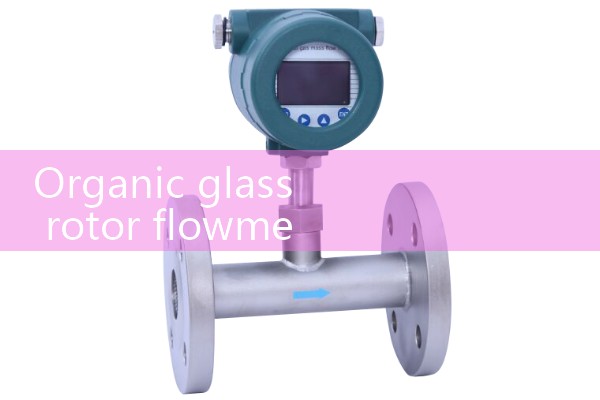
GPM and LPM on a glass rotor flow meter are both flow units. GPM is the abbreviation for gallon per minute, which means gallon per minute. LPM stands for liter per minute. The conversion relationship between GPM and LPM is: 1 gallon (US)=3.785 412 liters. So the conversion relationship for flow rate per unit time is: 1 GPM=3.785 LPM. Working principle of glass rotor flowmeter: When the fluid passes through a conical glass tube from bottom to top, a pressure difference is generated between the upper and lower parts of the float, and the float rises under this pressure difference. When the upward force, buoyancy, and viscous lift acting on the float are equal to the weight of the float, the float is in an equilibrium position. Therefore, there is a certain proportional relationship between the fluid flow rate flowing through the glass rotor flowmeter and the rising height of the float, that is, the flow area of the glass rotor flowmeter. The position height of the float can be used as a measure of flow rate. Additional information: Glas