

 Current position > News detail
『Fire Hydrant Flow Test Meter Equipment: Pitot Gauges vs Digital Flow Test Manifolds』Related information(clamp on meter|electromagnetic meter|venturi meterrotameter|orifice meter|ultrasonic flow meter|mass flow meter|coriolis mass flow meter|coriolis flow meter|magnetic flow meter|magmeter flow meter|magflow flow meter|mag meter flow meter|electromagnetic flow meter|vortex flow meter|turbine flow meter|thermal mass flow meter|thermal flow meter|rotameter flow meter)

Fire Hydrant Flow Test Meter Equipment: Pitot Gauges vs Digital Flow Test Manifolds
Quick Answer: A pitot gauge is the lower cost tool for basic hydrant flow tests. A digital flow test manifold gives better repeatability, automatic flow calculation, and direct electronic reports. Silver Instruments supplies pressure transmitters and flow meters that integrate with both manual and digital hydrant test setups.
What a Fire Hydrant Flow Test Actually Measures
A hydrant flow test normally follows NFPA 291 or a local fire code. The crew measures static pressure at the test hydrant, opens a nearby hydrant, and records residual pressure plus pitot pressure at the discharge nozzle. Flow is calculated from pitot pressure and nozzle diameter. The common US formula is Q equals 29.83 times c times d squared times square root of P. Here c is the nozzle coefficient, d is nozzle diameter in inches, and P is pitot pressure in psi. A digital manifold calculates this inside the device.
The numbers matter because fire pumps, mains, and hydrant spacing depend on available flow. If the pitot reading is 45 psi and the nozzle coefficient is 0.9, a contractor can calculate flow right away. Many municipal water departments in Vietnam and the Philippines still use paper forms for this.
Pitot Gauge Equipment in the Field
A standard pitot gauge set has a metal blade, a pressure gauge, a hose fitting, and an air bleed valve. The blade is placed into the hydrant stream. The gauge reads velocity pressure in psi or bar. Common ranges are 0 to 100 psi and 0 to 160 psi. Gauge accuracy is often plus or minus 1.6 percent of full scale. In practice, a 0 to 160 psi gauge can have an error of about 2.6 psi anywhere on the scale. That is acceptable for rough checks but not ideal for pump acceptance tests.
Pitot gauges are simple and low cost. A basic kit may run from 80 to 300 USD depending on the gauge, the blade, and the case. Field crews in Indonesia and Saudi Arabia use them because there is no battery to charge and no software to update. The downside is manual reading. We have seen this on customer sites many times. One crew member holds the blade. Another reads the gauge. A third writes the number on paper. Parallax error and water hammer are common. Gauge needle bounce adds more error. There is no automated data trail unless you add a camera or paper log.
Digital Flow Test Manifold Equipment
A digital flow test manifold replaces separate gauges with an electronic package. It measures static pressure, residual pressure, and pitot pressure through one or more transducers. The built-in processor calculates flow using the same NFPA 291 formula. Many units store 200 to 2000 tests with time stamp, operator ID, nozzle size, and GPS location. Pressure accuracy is often plus or minus 0.25 percent of full scale. Some manifolds also accept a direct flow input from an inline flow meter.
On a recent project in Dammam, a fire protection contractor switched from paper logs to a digital manifold. The crew saved about 25 minutes per hydrant because data entry was automatic. The main limits are cost and training. A digital manifold can run from 1500 to 6000 USD depending on sensor count, data logging, and wireless export.
Pitot Gauges vs Digital Flow Test Manifolds: Key Differences
Data quality is the first split. A pitot gauge gives one pressure reading at one moment. A digital manifold logs several pressure channels at the same time and calculates flow before the ope
Repeatability also matters. Manual readings change from person to person because the blade angle and gauge reading position shift. Digital manifolds reduce that error, but only if sensors receive regular calibration.
Cost is another issue. Pitot kits cost less upfront. Digital manifolds cost more but cut labour and data entry time. In many cases, one contractor in Malaysia keeps both. The pitot gauge is a backup when the manifold battery dies.
Which Fire Hydrant Test Equipment Should You Choose?
If tests happen twice a year and budgets are tight, a pitot gauge is enough. If the water authority or client asks for trend data, electronic submittals, or third party verification, go with a digital manifold. Most engineers skip the middle option because there is no strong use case for it.
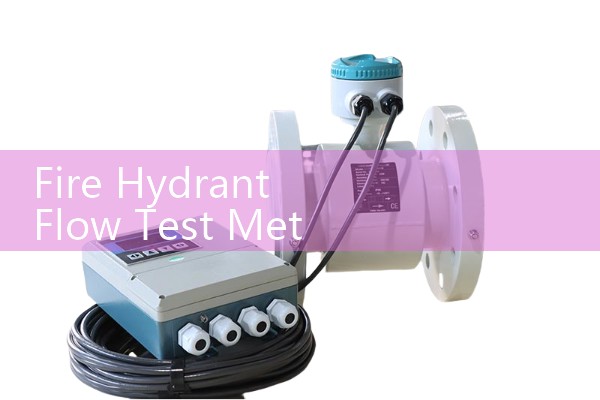
In practice, pump stations and large industrial plants often install a permanent flow meter and pressure transmitter instead of relying only on portable test equipment. A DN80 electromagnetic flow meter from Silver Instruments can measure hydrant discharge directly during annual fire pump tests. A 0 to 10 bar pressure transmitter with 4-20 mA HART output records static and residual pressure at the header.
How Silver Instruments Supports Fire Hydrant Flow Testing
Silver Automation Instruments is a flow meter and pressure transmitter supplier based in Nanjing, China. The company ships to Southeast Asia, Oceania, Latin America, Africa, and the Middle East. For hydrant test skids and fire pump packages, we provide electromagnetic flow meters, ultrasonic flow meters, and pressure transmitters with 4-20 mA HART or Modbus RS485 output. Common sizes are DN50, DN80, DN100, and DN150. We also supply paperless recorders for long term fire pump test records.
Send us your required pressure range in bar, temperature in degree C, pipe size in DN, and flow range in m3/h. We will quote a compatible transmitter or flow meter for your manual or digital hydrant test setup. Tel: +86-25-68650347. WhatsApp: +86-25-52155837. WeChat: +86 15365082610. Website: flow-meter.com.au
FAQ
Q: Can a digital flow test manifold replace all pitot gauges?
A: Yes for most hydrant flow tests. But many crews keep one pitot gauge as a backup because it needs no battery and no calibration cycle.
Q: What pressure range should a pitot gauge have for fire hydrant tests?
A: A 0 to 160 psi gauge covers most municipal hydrant tests. For lower pressure networks, a 0 to 100 psi range gives easier reading.
Q: Does Silver Instruments sell complete hydrant test manifolds?
A: We do not sell the complete portable manifold. We supply pressure transmitters, flow meters, and recorders that integrate with hydrant test skids and fire pump monitoring panels.
Q: What flow meter is recommended for permanent hydrant flow monitoring?
A: A DN80 electromagnetic flow meter with PTFE liner and stainless steel electrodes works well for clean water. For non invasive installation on larger pipes, an ultrasonic clamp-on flow meter is an option.
Q: What information do you need for a quote?
A: Pipe size in DN, pressure range in bar, water temperature in degree C, flow range in m3/h, output signal such as 4-20 mA HART or Modbus RS485, and the country of delivery. Send these details by WhatsApp or WeChat and we will reply with a price list.