

 Current position > News detail
『Flow meter for measuring water』Related information(clamp on meter|electromagnetic meter|venturi meterrotameter|orifice meter|ultrasonic flow meter|mass flow meter|coriolis mass flow meter|coriolis flow meter|magnetic flow meter|magmeter flow meter|magflow flow meter|mag meter flow meter|electromagnetic flow meter|vortex flow meter|turbine flow meter|thermal mass flow meter|thermal flow meter|rotameter flow meter)
1. Electromagnetic flowmeter can measure pure water, but attention should be paid to the lower limit of conductivity and installation conditions The measurement principle and applicability of electromagnetic flowmeter work based on Faradays law of electromagnetic induction, requiring the fluid to have a minimum conductivity (usually ≥ 5 μ S/cm). The conductivity of pure water is extremely low (about 0.055 μ S/cm), which is lower than the minimum required value for most land-based electromagnetic flow meters. Ultra low conductivity specialized electromagnetic flow meters (such as the Cologne OPTIFLUX 2300 series, E+H Promag series) are required, with a conductivity threshold that can be reduced to 1 μ S/cm
2. Key implementation parameters for stove lifting - Conductivity threshold: must be ≤ 1 μ S/cm - Diameter range: DN15-DN200- Accuracy level: 0.5% to 1.0% (requires on-site calibration) - Electrode material: titanium/tantalum electrode (corrosion-resistant) - Grounding requirements: a dedicated grounding ring must be configured 3 Installation precautions: When measuring pure water, ensure that the pipe is fully filled and firmly grounded. It is recommended to use PTFE material for the pipe lining. Note that pure water is prone to polarization when flowing in pipelines, and it is necessary to choose a model with polarization voltage compensation function. Alternative solution: If the conductivity continues to be below 1 μ S/cm, it is recommended to use a Coriolis mass flowmeter (such as Emerson Micro Motion series), whose measurement accuracy is not affected by conductivity, but the cost is high and the pressure loss is large. (Note: The above technical parameters are based on the latest product manuals of main
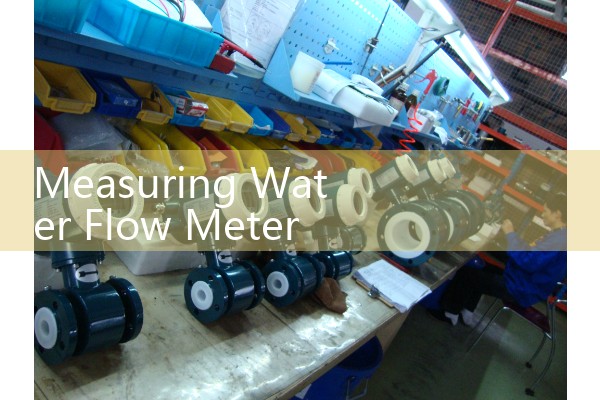
2. How to use ultrasonic flow meters to measure water flow
When using ultrasonic flow meters to measure water flow, appropriate equipment types should be selected according to pipeline conditions, water body characteristics, accuracy requirements, and cost budget, and standardized operation and maintenance procedures should be followed. Specific operation process:
1. Choose the appropriate type of ultrasonic flowmeter. According to the application scenario requirements, ultrasonic flowmeters are mainly divided into three types: insertion type, pipe section type, and external clamp type. Their characteristics and applicable scenarios are as follows: Insertion type ultrasonic flowmeter advantages: high cost-effectiveness, installation does not require cutting off the pipeline, only the sensor needs to be inserted into the pipeline through a hole, suitable for large diameter pipelines (such as urban water supply main pipelines, with a diameter of 1 meter or more) or existing pipeline systems that require new flow measurement functions. Applicable scenarios: Industrial auxiliary pipeline monitoring scenarios with low requirements for flow accuracy. Attention: Accuracy is greatly affected by installation quality. It is necessary to ensure that the insertion depth of the sensor meets the requirements of the pipeline diameter and avoid areas such as pipeline bends and valves that are prone to vortex generation. Advantages of pipe section ultrasonic flowmeter: high accuracy, strong stability, simple internal structure, not easily blocked or interfered by impurities, suitable for long-term stabl